HSEQ stands for Health, Safety, Environment and Quality. It is an approach used by organisations to manage workplace health and safety, environmental responsibilities and the quality of the work they deliver.
For utilities, street works and infrastructure organisations, HSEQ plays an important role in everyday operations. Work is often carried out across multiple sites by field-based teams, contractors and subcontractors, creating a need for clear processes that protect people, maintain standards and provide visibility over compliance.
From completing risk assessments and recording incidents to carrying out inspections and monitoring operative competence, HSEQ brings these responsibilities together as part of a wider approach to safe and effective delivery.
Understanding the Four Elements of HSEQ
HSEQ is built around four key areas of responsibility, each addressing a different aspect of how organisations manage their people, operations and wider impact. Together, they provide a structured approach to supporting safe, responsible and high-quality delivery.
Health
Health focuses on protecting the physical and mental wellbeing of employees, operatives and others who may be affected by work activities. For field-based teams, this means recognising and managing occupational health risks that can arise through day-to-day activities and prolonged exposure.
- Managing exposure to noise and vibration
- Monitoring Hand-Arm Vibration Syndrome (HAVS) risks
- Reducing risks associated with manual handling
- Supporting occupational health and wellbeing
- Identifying and managing long-term health hazards
Safety
Safety focuses on identifying hazards, assessing risks and putting appropriate controls in place to prevent incidents and injuries. For utilities and street works organisations, consistent safety processes are particularly important when work is being delivered across multiple sites by different teams.
- Completing risk assessments before work begins
- Identifying and reporting hazards and near misses
- Carrying out site audits and inspections
- Delivering safety briefings and updates
- Recording and investigating incidents
- Implementing corrective actions
Environment
Environment focuses on understanding and managing the impact that work activities can have on the surrounding environment. This means ensuring environmental responsibilities are considered throughout delivery, including by operatives working directly on site.
- Managing waste and its disposal
- Preventing pollution and environmental incidents
- Using materials and resources responsibly
- Identifying environmental risks on site
- Meeting relevant environmental requirements
- Recording and responding to environmental issues
Quality
Quality focuses on ensuring work is completed to the required standards, specifications and customer expectations. It also provides organisations with the information needed to identify issues, address areas of underperformance and continually improve how work is delivered.
- Carrying out quality inspections and checks
- Recording and managing defects
- Capturing evidence of completed work
- Monitoring compliance with required standards
- Identifying recurring quality issues
- Tracking corrective actions and improvements
Why Is HSEQ Important?
HSEQ plays an important role in protecting operatives, the public and others affected by work activities. By identifying hazards and managing risks, organisations can reduce the likelihood of incidents, injuries and work-related ill health.
It also supports legal and regulatory compliance. Employers in Great Britain have a duty to assess and manage workplace risks, making effective health and safety management an essential part of meeting their responsibilities.
Beyond compliance, effective HSEQ management can help maintain quality, prevent issues from escalating and reduce operational disruption. With 40.1 million working days lost due to work-related ill health and non-fatal workplace injuries in Great Britain in 2024/25, the impact extends beyond safety alone.
Legislation, Regulations and Standards Associated With HSEQ
HSEQ isn’t a single legal requirement. Instead, organisations need to consider a range of legislation, regulations and standards depending on their activities. For utilities and street works organisations, some of the most relevant include:
- Health and Safety at Work etc. Act 1974: sets out employers’ fundamental health and safety duties in Great Britain.
- Management of Health and Safety at Work Regulations 1999: requires organisations to assess and manage workplace risks.
- Reporting of Injuries, Diseases and Dangerous Occurrences Regulations 2013 (RIDDOR): requires certain work-related deaths, injuries, occupational diseases and dangerous occurrences to be reported and recorded.
- Control of Substances Hazardous to Health Regulations 2002 (COSHH): requires employers to assess and control exposure to substances hazardous to health.
- Control of Vibration at Work Regulations 2005: covers the assessment and control of vibration risks, including those associated with HAVS.
- Environmental Protection Act 1990: establishes key responsibilities around the management of controlled waste.
- New Roads and Street Works Act 1991 (NRSWA): provides the legislative framework for managing and coordinating street works.
What Does HSEQ Look Like in Practice?
HSEQ extends beyond policies and procedures, forming part of the everyday activities that help organisations deliver work safely and to the required standard.
For field-based organisations, much of this activity happens at the point of work. An operative may complete a risk assessment before starting a job, report a hazard discovered on site or receive an important safety briefing. At the same time, back office teams may be reviewing inspection results, investigating incidents or monitoring trends across multiple projects.
Common examples of HSEQ activities include:
- Risk assessments
- Site audits and inspections
- Hazard and near-miss reporting
- Incident reporting and investigation
- Skills and competence management
- HAVS monitoring
- Safety briefings
- Corrective actions
- Environmental reporting
- Quality inspections and checks
Having clear processes for capturing and reviewing this information helps organisations understand what is happening across their operations and respond when action is required.
How Depotnet Supports HSEQ Management
Depotnet provides dedicated HSEQ tools designed specifically for utilities and street works, connecting essential health, safety and compliance activities directly with the jobs, operatives and projects they relate to.
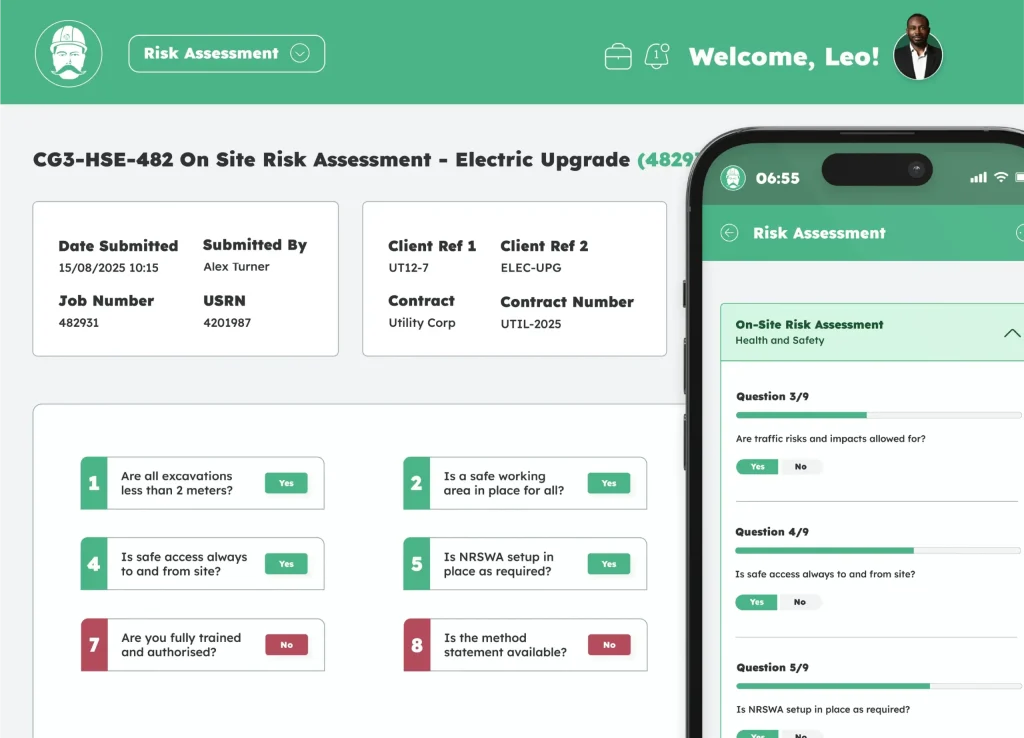
Risk Assessments
Create customisable risk assessments that operatives complete on site and link directly to live jobs, helping identify hazards and apply the right controls throughout delivery.
- Implement mandatory risk controls
- Capture changing site conditions
- Monitor assessment completion
- Strengthen on-site accountability
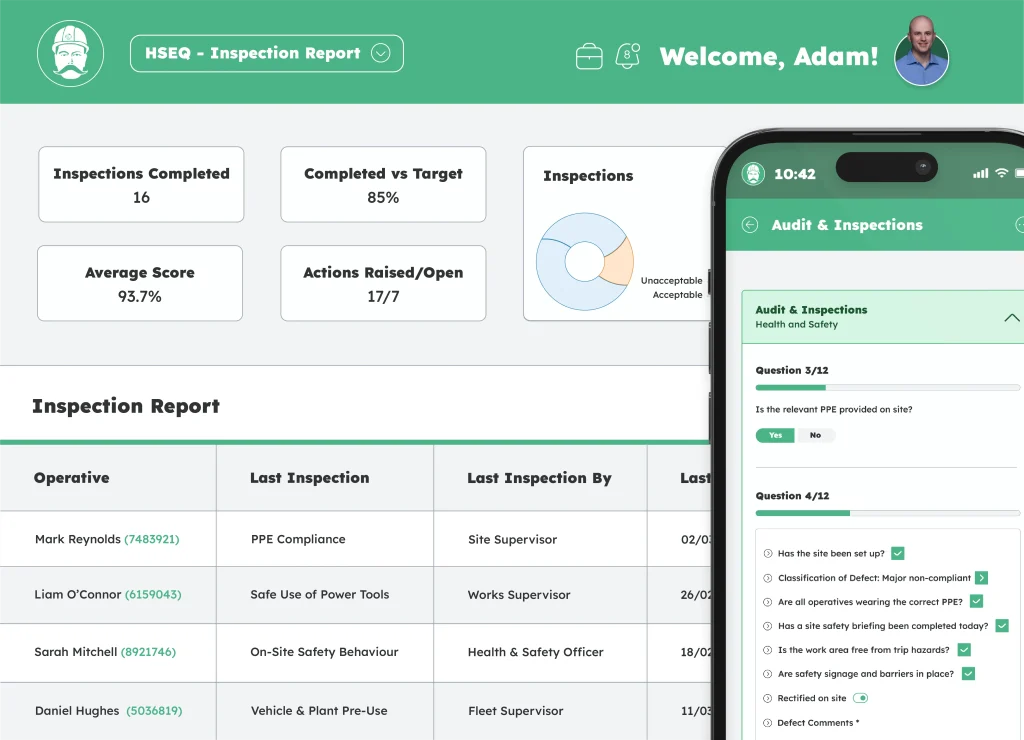
Audits & Inspections
Configure structured audits and inspections for use in the field or back office, with scoring, defect tracking and clear visibility of compliance.
- Standardise audits with consistent templates
- Raise and track defects and actions
- Record pass/fail outcomes
- Generate structured audit reports
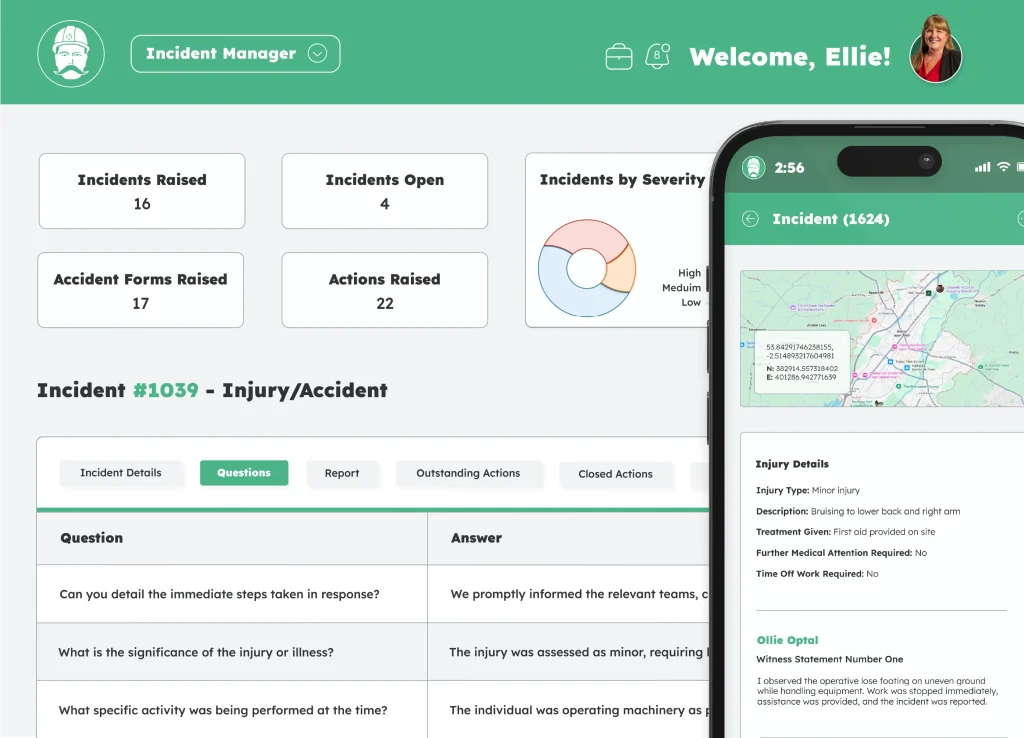
Incident Manager
Capture incidents as they happen, manage structured investigations and track corrective actions through to resolution.
- Report incidents instantly using QR functionality
- Guide investigations with supporting evidence
- Assign and track corrective actions
- Monitor incidents through central dashboards
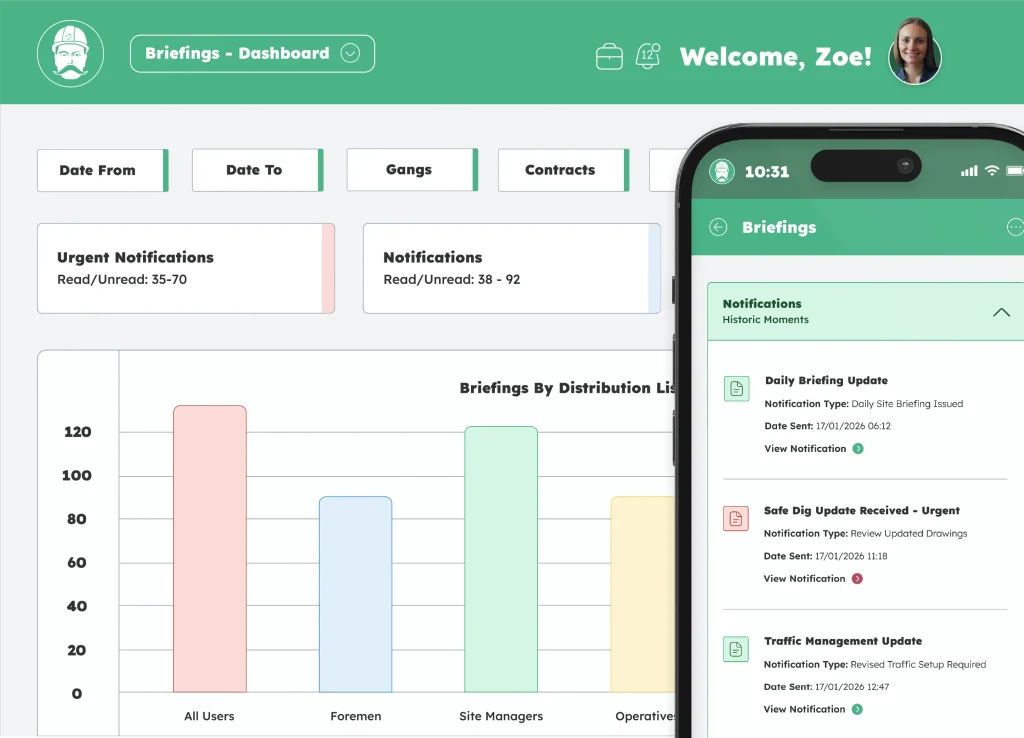
Briefings & Notifications
Send safety updates and briefings directly to site teams, capture acknowledgement and maintain a clear record of communication.
- Issue urgent updates and routine briefings
- Capture digital signatures
- Target specific teams, roles and locations
- Communicate changes directly to the field
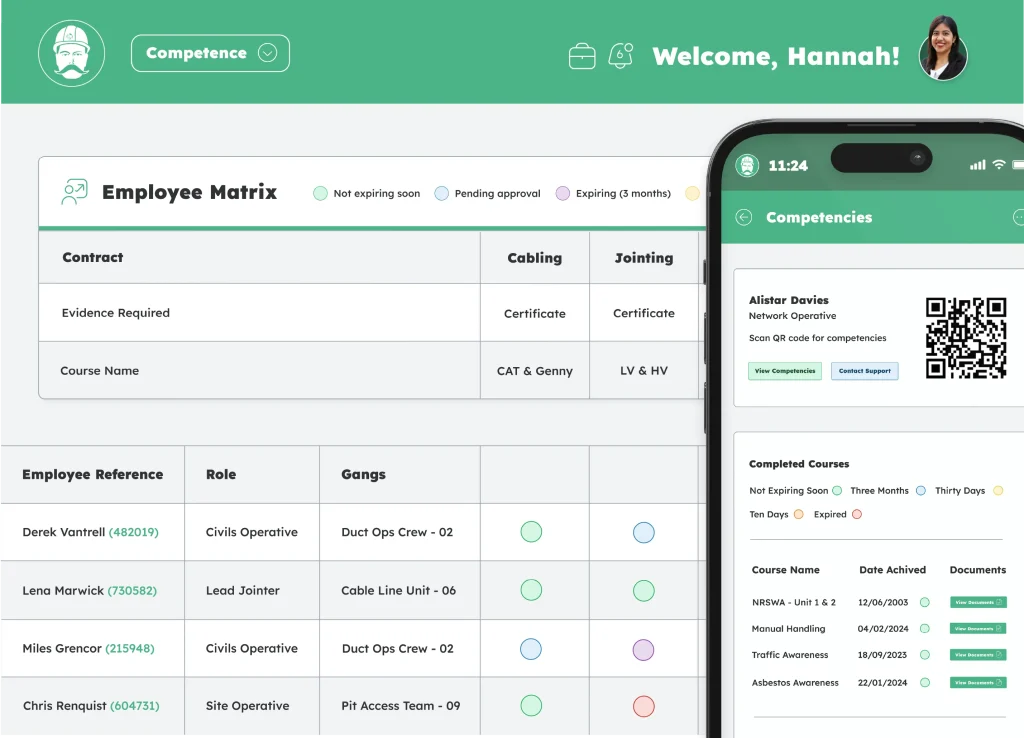
Skills & Competence
Maintain visibility of workforce training, certifications and qualifications to help ensure operatives are appropriately skilled for the work they undertake.
- Centralise training and qualification records
- Automate expiry and renewal alerts
- Configure competence matrices
- Access operative credentials instantly
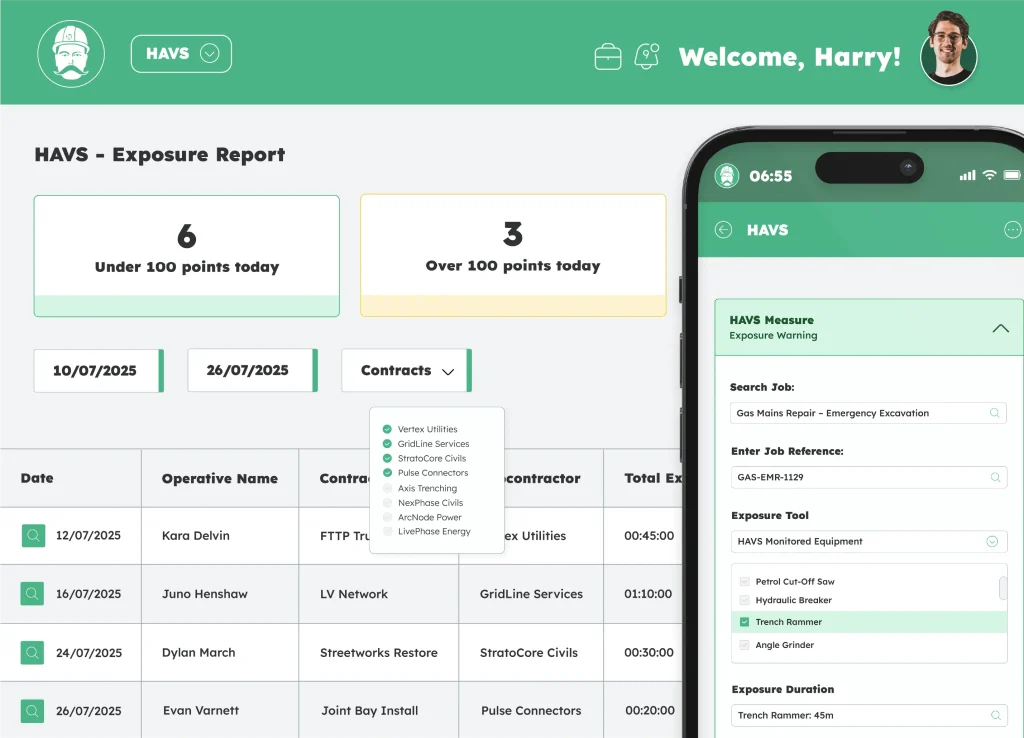
HAVS Management
Monitor cumulative vibration exposure across tools and tasks, helping teams identify when operatives are approaching defined exposure limits.
- Track cumulative vibration exposure
- Alert operatives and supervisors to overexposure
- Record tool vibration values and usage
- Review exposure across jobs
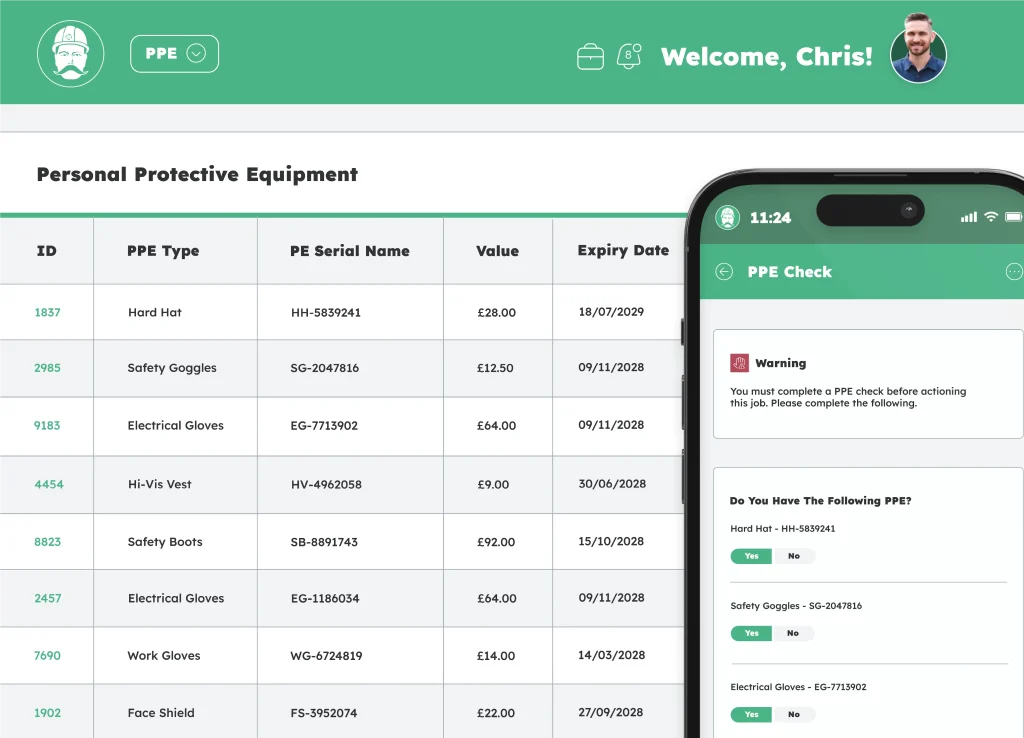
Personal Protective Equipment (PPE)
Maintain accurate records of PPE issued across the workforce and give teams greater visibility of equipment requirements.
- Manage PPE types, sizes and locations
- Monitor issued equipment and expiry dates
- Enable field-based PPE verification
- Assign mandatory PPE by competence role
HSEQ shouldn’t operate separately from the work being delivered. Connecting risk assessments, incidents, competence, inspections and workforce safety with wider job management allows data captured by field operatives to feed directly back to office teams, while updates, actions and critical information can be communicated back to the field.
Depotnet helps utilities and street works organisations create this two-way flow of information, connecting HSEQ with wider operations to help protect operatives, maintain compliance and deliver work to the required standard.